NTE ELECTRONICS 2000236 Antenna Rotator Inc.
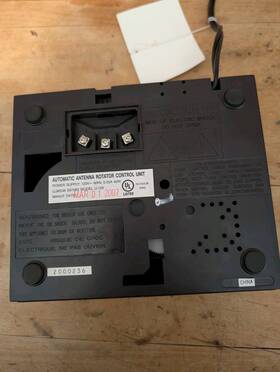
( Brand: Nte Electronics ), ( Manufacturer Part Number: 2000236 ), ( Type: Antenna Rotator ), ( Year Manufactured: 2007 )
Review NTE ELECTRONICS Inc. 2000 236 Vintage Antenna Rotator
The **NTE 2000236 Antenna Rotator** is a high-performance, ruggedly engineered azimuth rotator designed for serious amateur radio operators, emergency communicators, and professional users who demand precision, reliability, and durability in their antenna systems. Built with a robust **360-degree continuous rotation mechanism**, this rotator is engineered to handle heavy-duty loads with ease, making it ideal for supporting large antennas, Yagi arrays, beam antennas, and even multi-element setups without compromising on smooth operation or longevity. The rotator features a **high-torque, low-friction design**, incorporating sealed ball bearings and precision-machined components to ensure minimal wear over extended periods of use, even in harsh environmental conditions. Its **IP65-rated enclosure** provides superior protection against dust, moisture, and corrosion, making it suitable for outdoor installations in exposed or challenging locations, such as rooftops, towers, or remote field sites.
At the heart of the NTE 2000236 is a **dual-speed control system**, allowing operators to fine-tune their antenna positioning with either **slow, precise adjustments** for critical alignment or **rapid sweeping motions** for quick scanning. The rotator is compatible with a wide range of control interfaces, including **serial (RS-232), USB, and digital (POTS) connections**, ensuring seamless integration with modern digital control systems, repeaters, or even manual control boxes. Its **low-profile design** and **compact footprint** make it versatile for installations where space is limited, while its **heavy-duty mounting bracket** ensures stable and secure attachment to poles, towers, or walls. The rotator s **corrosion-resistant materials**, including stainless steel and high-grade plastics, further enhance its durability, ensuring reliable performance in extreme temperatures, high humidity, or salty coastal environments.
For users who prioritize flexibility, the NTE 2000236 supports **both manual and automated operation**, making it equally suitable for hands-on tuning or automated antenna switching via software like **DXLab Suite, N1MM Logger, or WSJT-X**. Its **smooth, silent operation** minimizes interference with nearby communications, while its **backlash-free mechanism** guarantees accurate and repeatable positioning, critical for directional antenna work in contesting, DXing, or emergency communications. Whether deployed in a permanent station setup or a portable field environment, this rotator delivers the precision and endurance required to meet the demands of modern radio enthusiasts and professionals alike. With its blend of **industrial-grade construction, adaptable control options, and unmatched reliability**, the NTE 2000236 stands as a premium choice for anyone seeking a rotator that performs as consistently as it does beautifully.
**Pros and Cons of buying a NTE 2000236 Antenna Rotator**
The NTE 2000236 is a manual azimuth antenna rotator designed for amateur radio and similar applications. Below is a detailed breakdown of its advantages and disadvantages.
### **Pros**
1. **Reliability and Durability**
The NTE 2000236 is known for its robust construction, featuring a sturdy metal housing and high-quality bearings. It is designed to withstand outdoor conditions, including temperature fluctuations and exposure to the elements, making it suitable for long-term use.
2. **Manual Operation**
Since it is a manual rotator, it does not require electricity or batteries, which eliminates the risk of power failure or electrical malfunctions. This makes it ideal for remote or off-grid installations where power sources may be unreliable.
3. **Low Maintenance**
Manual rotators generally require less maintenance compared to motorized ones. There are no motors, gears, or electronic components to wear out or fail, reducing the need for frequent servicing. Lubrication of the bearings is the primary maintenance task, which can be done periodically.
4. **Cost-Effective**
The NTE 2000236 is relatively affordable compared to motorized rotators with similar specifications. Its simplicity in design contributes to lower manufacturing costs, making it accessible for hobbyists and budget-conscious users.
5. **Compatibility**
It is designed to work with a wide range of antennas, including dipole, Yagi, and beam antennas, as long as the mounting hardware is compatible. The rotator s sturdy construction ensures it can handle moderate wind loads and antenna weights.
6. **No Electrical Hazards**
Because it does not rely on electricity, there is no risk of electrical shocks or short circuits, which is particularly advantageous in wet or corrosive environments.
7. **Simple Installation**
The rotator is designed for straightforward installation. It comes with mounting hardware and instructions, and its manual operation does not require complex wiring or control systems.
---
### **Cons**
1. **Labor-Intensive Operation**
The primary drawback of a manual rotator is that it requires physical effort to turn the antenna. Adjusting the direction of the antenna manually can be time-consuming, especially if frequent or precise adjustments are needed. This can be inconvenient during contests or when tracking moving targets like satellites or aircraft.
2. **Limited Range of Motion**
While the NTE 2000236 offers a full 360-degree rotation, manual operation may not allow for quick or smooth adjustments over large angles. Unlike motorized rotators, there is no automatic or remote control to facilitate rapid changes in direction.
3. **No Azimuth or Elevation Control**
Manual rotators like this one only control azimuth (horizontal) rotation. If elevation (tilt) control is required, an additional manual or motorized tilt mechanism would need to be added separately, increasing complexity and cost.
4. **Dependence on User Presence**
Since the rotator requires manual intervention, it cannot be left unattended to track signals or targets automatically. This limits its utility in scenarios where continuous or unattended operation is desired.
5. **Potential for User Error**
Manual operation introduces the possibility of human error, such as misaligning the antenna or applying excessive force, which could damage the rotator or the antenna. Unlike motorized systems with built-in limits, manual rotators do not have automatic safeguards against over-torquing.
6. **Limited Features**
The NTE 2000236 lacks features such as digital displays, remote control interfaces, or programming capabilities. Users who rely on advanced features like automatic tracking or logging may find it limiting.
7. **Wind Load Limitations**
While the rotator is sturdy, its manual design may not be ideal for very large or heavy antennas in high-wind conditions. Excessive wind could make manual operation difficult or even dangerous, requiring additional bracing or support.
---
### **Conclusion**
The NTE 2000236 antenna rotator is an excellent choice for users who prioritize simplicity, reliability, and low maintenance. Its manual operation makes it ideal for hobbyists, budget-conscious operators, or those in locations where power is unreliable. It is particularly well-suited for stationary or low-mobility setups where frequent or precise adjustments are not critical.
However, for users who require quick, automated, or remote-controlled antenna movement such as contest operators, satellite enthusiasts, or those tracking moving targets the limitations of a manual rotator may outweigh its advantages. In such cases, a motorized rotator with remote control capabilities would be more practical.
---
### **Recommendation**
**Buy the NTE 2000236 if:**- You need a simple, durable, and low-maintenance rotator for basic amateur radio operations.
- You operate in an area with unreliable or no power supply.
- You are working with moderate-sized antennas and do not require frequent or automated adjustments.
- You prefer a cost-effective solution without the complexity of motorized systems.
**Avoid the NTE 2000236 if:**- You need automated or remote-controlled antenna movement.
- You frequently adjust your antenna direction, especially for contests or satellite tracking.
- You operate in high-wind conditions with very large or heavy antennas.
- You require elevation control or advanced features like digital displays or programming.
For users who meet the criteria for a manual rotator, the NTE 2000236 is a solid and practical investment. For those who need more advanced functionality, consider upgrading to a motorized rotator with remote control capabilities.
Details:
This aNtenna rotator is designed to assist with aiming and positioning antennas for optimal radio communication. With its durable construction and reliable functionality, it is a sought-after accessory for consumers looking to enhance their radio communication experience. In working on condition.
part #: 2000236 price
- $9.99
specifications radiparaccessori:
- brand: Nte Electronics
- mpn: 2000236
- type: Antenna Rotator
- year manufactured: 2007
general radiparaccessori:
- condition: Used
- Radio Communication > Parts Accessories > Other Radio Communication Accs
payments radiparaccessori:
- wallet: Paypal
- credit card: Diners-club
- other
offer radiparaccessori:
- started: February 6, 2026
- quantity: 1
- options: Ship-to-home
- availability: In Stock
- sold: 0
seller radiparaccessori:
- # reviews: 0
- city: Columbus, Ohio
- rating: 0.0%
shipping radiparaccessori:
- transit: 5-12 Days
- carrier: USPS
- class: Standard
- service: USPS Ground Advantage
- cost: $5.20
- type: Calculated
returns radiparaccessori:
- policy: No Returns
Nte Electronics 2000236 Is Similar To:
- Ecg 768249175933 Vtg Nte Automatic Tv-fm Antenna Rotator Control Box U-105 Works (37.9% similar) ANtenna rotator control box is in good working condition. VG Nte ECG automatic TV-FM aNtenna rotator U-105...(August 18th, 2023)