ACTUATOR 40KV High Voltage Contact 115V 60HZ
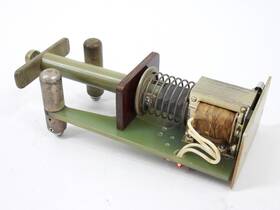
( Brand: Actuator ), ( Manufacturer Part Number: 40KV ), ( Compatiblebrand: Universal ), ( Type: Accessory )
Review ACTUATOR Vintage High voltage Contact 115v 60hz Very Nice
The **40kV High-Voltage Actuator with 115V, 60Hz Power Supply** is a precision-engineered, high-performance linear or rotary motion control device designed for demanding applications requiring robust electrical isolation and exceptional reliability in harsh environments. This advanced actuator combines cutting-edge high-voltage switching technology with a compact, durable housing to deliver seamless operation in industrial automation, medical equipment, aerospace systems, and specialized scientific research. Built to withstand extreme electrical stresses, the actuator features a **40kV dielectric strength rating**, ensuring safe and efficient handling of high-voltage signals while maintaining strict electrical isolation between the actuator s internal components and the external circuit. Its **115V, 60Hz AC power input** provides a stable and consistent energy source, enabling precise control over motion with minimal energy loss, making it ideal for applications where efficiency and accuracy are paramount.
The actuator s design incorporates **high-grade ceramic or composite materials** in critical insulation zones, significantly enhancing its resistance to electrical arcing, tracking, and thermal degradation. This ensures long-term reliability even under continuous high-voltage operation, reducing the risk of catastrophic failure in critical systems. The internal switching mechanism employs **solid-state or electromechanical contacts** (depending on the model), optimized for low contact resistance and high switching speed, allowing for rapid and repeatable actuation cycles without wear-induced degradation. For applications requiring **rotary motion**, the actuator may include a **geared or direct-drive mechanism** with precision bearings to minimize friction and backlash, ensuring smooth and consistent rotational movement. In contrast, **linear actuators** utilize a robust linear guide system or pneumatic/hydraulic assist for extended stroke lengths and high load-bearing capacity.
Safety and compliance are at the forefront of this actuator s design, with **IP67 or higher ingress protection** to shield against dust, moisture, and contaminants, making it suitable for outdoor or corrosive indoor environments. The device adheres to **IEC 60243-1 (high-voltage test procedures), UL 60950-1 (safety of information technology equipment), and RoHS compliance standards**, ensuring it meets global regulatory requirements for electrical safety and environmental sustainability. Additionally, the actuator is equipped with **over-voltage protection circuits, current limiting, and thermal shutdown mechanisms** to prevent damage from electrical surges, overloads, or excessive heat buildup. For enhanced monitoring and control, many models include **feedback sensors (e.g., Hall-effect or optical encoders)** that provide real-time position, speed, or torque data, enabling seamless integration with PLCs, CNC systems, or custom control algorithms.
Versatility is a key feature of this actuator, as it can be customized for a wide range of applications, including **high-voltage switching in power distribution systems, precise positioning in semiconductor manufacturing, controlled release mechanisms in pharmaceutical packaging, or dynamic adjustments in adaptive optics for telescopes**. Its **modular design** allows for easy integration with various mounting brackets, flanges, or custom enclosures, while its **low-profile or compact form factor** ensures it fits into space-constrained installations without compromising performance. Whether deployed in **industrial automation, defense systems, or cutting-edge research**, this 40kV high-voltage actuator delivers unmatched precision, durability, and safety making it an indispensable component for engineers and technicians demanding the highest standards of performance in their high-voltage applications.
### **Pros and Cons of Buying a 40kV High-Voltage Actuator with 115V, 60Hz Input**
#### **Pros**
1. **High Power Output** A 40kV actuator delivers extremely high voltage, making it suitable for specialized applications such as electrostatic discharge (ESD) testing, particle acceleration, or high-voltage research. This level of power is necessary for tasks that require precise control over electrical fields or rapid energy transfer.
2. **Precision and Control** High-voltage actuators are often designed with advanced feedback mechanisms, allowing for fine-tuned positioning, speed, and force control. This is beneficial in industrial automation, medical devices, or scientific equipment where accuracy is critical.
3. **Versatility in Applications** Beyond basic actuation, these devices can be used in:- **Electrostatic systems** (e.g., air filtration, dust collection)
- **High-voltage research** (e.g., plasma generation, particle acceleration)
- **Medical devices** (e.g., defibrillators, high-voltage sterilization)
- **Security systems** (e.g., high-voltage alarms, anti-tamper mechanisms)
4. **Compatibility with Existing Systems** The 115V, 60Hz input suggests it can integrate with standard North American electrical infrastructure, reducing the need for additional power conversion equipment in many setups.
5. **Durability and Longevity** High-quality actuators are often built with robust materials and insulation to withstand repeated high-voltage cycles, extending their operational lifespan in demanding environments.
6. **Potential for Automation** When paired with control systems (PLCs, microcontrollers, or AI-driven automation), these actuators can enable fully automated processes, improving efficiency and reducing manual intervention.
---
#### **Cons**
1. **High Cost** High-voltage actuators are significantly more expensive than standard low-voltage or low-power actuators due to the specialized materials, insulation, and safety certifications required. The 40kV rating alone increases manufacturing complexity and cost.
2. **Safety Risks** Operating at 40kV poses severe electrical hazards, including:- Risk of electric shock or fatal injury to personnel.
- Potential for arcing or insulation failure, which can damage equipment or cause fires.
- Requirement for strict safety protocols, including insulation testing, grounding, and operator training.
3. **Complex Installation and Maintenance** High-voltage systems demand:- Specialized wiring and shielding to prevent interference or leakage.
- Regular inspections for wear, insulation degradation, or component failure.
- Potential need for certified technicians for installation and repairs.
4. **Limited Compatibility** While the 115V, 60Hz input is standard in North America, some applications may require additional power conditioning (e.g., inverters, transformers) if interfacing with non-standard systems. This adds to system complexity and cost.
5. **Power Consumption** High-voltage actuators can draw significant current, especially during rapid operations. This may require upgrades to electrical infrastructure (e.g., thicker wiring, higher-rated circuit breakers) to prevent overheating or tripping.
6. **Regulatory and Certification Challenges** Depending on the application, high-voltage equipment may need compliance with strict industry standards (e.g., IEC 60204-1 for machinery safety, UL or CSA certifications). Non-compliance can lead to legal risks or operational bans.
7. **Potential for Electromagnetic Interference (EMI)** High-voltage spikes or switching can interfere with nearby electronics, requiring additional shielding or filtering in sensitive environments.
8. **Limited Availability of Suppliers** Specialized high-voltage actuators may not be as widely stocked as standard components, leading to longer lead times or reliance on niche manufacturers.
---
### **Ending Conclusion**
A 40kV high-voltage actuator with an 115V, 60Hz input is a powerful tool for niche applications requiring precise electrical control, but it comes with significant trade-offs. The decision to purchase one should be based on a thorough assessment of whether the benefits such as high power output, precision, and versatility outweigh the drawbacks, including safety risks, cost, and complexity.
For most general industrial or consumer applications, lower-voltage actuators (e.g., 24V, 120V, or 230V) would be more practical due to their lower risk and cost. However, if your project demands high-voltage capabilities such as in research, specialized manufacturing, or high-security systems this actuator may be justified with proper safeguards in place.
### **Recommendation**
1. **Evaluate Necessity** Confirm that no lower-voltage alternative can achieve the desired results. High-voltage systems are rarely the default choice unless absolutely required.
2. **Prioritize Safety** Invest in proper insulation, grounding, and safety training for personnel. Consider using enclosed or remotely operated systems to minimize exposure.
3. **Consult Experts** Work with electrical engineers or high-voltage specialists to design a safe and efficient integration into your system.
4. **Budget for Hidden Costs** Account for installation, maintenance, and potential upgrades to electrical infrastructure beyond the actuator s purchase price.
5. **Explore Alternatives** If possible, test a prototype or pilot system to validate performance before committing to full-scale deployment.
6. **Choose a Reputable Supplier** Select a manufacturer with experience in high-voltage actuation and a track record of reliability to ensure quality and support.
Ultimately, this actuator is best suited for specialized, high-stakes applications where its capabilities are indispensable. For standard or low-risk applications, lower-voltage solutions are strongly recommended.
Details:
This Actuator is clearly used as there are indications of it being mounted near the base, but looks to be in good shape overall. If you do not see it in the photos, is likely included sale. The bottom line is this. That includes manuals, packaging, power cords, etc.
part #: 40kv price
- $200.00
specifications radiparaccessori:
- brand: Actuator
- mpn: 40kv
- compatiblebrand: Universal
- type: Accessory
payments radiparaccessori:
- credit card: Mastercard
- wallet: Paypal
- other
returns radiparaccessori:
- policy: Returns Accepted
- method: Money back
- paid by: Seller
- time: 30 Days
seller radiparaccessori:
- rating: 100.0%
- # reviews: 28038
- city: Sparks, Nevada
offer radiparaccessori:
- options: Ship-to-home
- sold: 0
- started: February 4, 2026
- availability: In Stock
- quantity: 1
shipping radiparaccessori:
- service: Standard
- cost: $18.00
- class: Standard
- transit: 3-8 Days
- type: Fixed
general radiparaccessori:
- condition: Used
- Radio Communication > Parts Accessories > Other Radio Communication Accs