KANTRONICS CAB-K101 Mini Reader Rtty Ascii Rtty/ascii
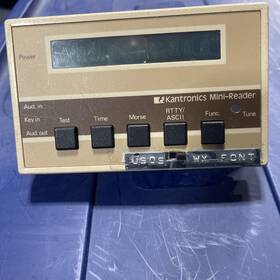
( Brand: Kantronics ), ( Manufacturer Part Number: CAB-K101 ), ( Type: Mini Reader ), ( Country Of Origin: United States )
Review KANTRONICS Mini Reader Rtty/ascii
The **Kantronics CAB-K101 Mini Reader** is a compact yet powerful RTTY/ASCII terminal interface designed for enthusiasts, hobbyists, and professionals seeking a reliable bridge between modern computing and the classic world of teletype and radio telegraphy. This versatile device serves as a seamless bridge between contemporary computers and vintage or modern RTTY (Radioteletype) equipment, enabling users to decode Morse code, transmit ASCII data, and interact with legacy systems with ease. Weighing in at just under a pound, the CAB-K101 packs a punch with its robust functionality, making it ideal for portable setups, field operations, or homebrew projects where space is at a premium. At its core, the Mini Reader supports both **RTTY (Baudot code)** and **ASCII** protocols, allowing it to interface with a wide range of teletype machines, radio transceivers, and even modern software-defined radio (SDR) systems. Whether you're decoding Morse code from a vintage telegraph key, interfacing with a K3 or IC-7000 radio for contesting, or experimenting with amateur radio digital modes, the CAB-K101 adapts effortlessly, converting serial data into a format that can be read by computers running applications like **Morse Runner, Fldigi, or even custom scripts** via its built-in serial interface.
One of the standout features of the CAB-K101 is its **dual-mode operation**, which allows it to function as both a **reader** (decoding incoming Morse or RTTY signals) and a **transmitter** (sending ASCII or Baudot data to a teletype or radio). The device includes a **built-in serial port (RS-232)**, which connects directly to a computer via a standard DB-9 connector, enabling real-time decoding of incoming signals into readable text. For those working with **RTTY (Continuous Wave or USB/LSB)**, the CAB-K101 features a **TNC (Terminal Node Controller) function**, allowing it to handle the modulation and demodulation of audio signals, making it compatible with most amateur radio transceivers. The unit also supports **variable baud rates** (from 45.45 baud up to 300 baud), accommodating everything from slow Morse code to faster RTTY transmissions, while its **adjustable audio thresholds** ensure clean decoding even in noisy environments. Additionally, the CAB-K101 includes a **built-in speaker and headphone jack**, providing immediate audio feedback for tuning and monitoring incoming signals, which is particularly useful for field operations where a computer display may not be practical.
Beyond its technical capabilities, the CAB-K101 is designed with **modularity and expandability** in mind. The unit features **screw terminals** for easy connection to external power (12V DC), audio input/output, and serial data lines, making it simple to integrate into custom setups or existing rigs. For users looking to enhance their experience, the device supports **external clocking** via a 5-pin DIN connector, allowing synchronization with other TNCs or SDR software for precise timing in digital modes. The CAB-K101 also includes a **user-friendly front panel** with an **LED indicator** for power and activity status, as well as **adjustable controls** for audio gain and threshold settings, giving operators fine-grained control over performance without requiring complex software adjustments. Whether used in a **home shack, portable operation, or as part of a larger automated system**, the Mini Reader s combination of **portability, versatility, and ease of use** makes it an indispensable tool for anyone bridging the gap between analog and digital communication.
For those new to RTTY or Morse code, the CAB-K101 serves as an excellent **learning tool**, offering a hands-on way to explore the fundamentals of telegraphy while interfacing with modern computing. Its **low power consumption** (operating on as little as 12V DC) and **durable construction** ensure reliability in both stationary and mobile applications, from contest stations to emergency communications setups. Whether you're a **radio amateur looking to decode contest logs, a historian preserving vintage teletype data, or a hobbyist experimenting with digital modes**, the Kantronics CAB-K101 Mini Reader delivers a **plug-and-play solution** that simplifies the process of working with RTTY and ASCII data. With its **compact form factor, robust performance, and intuitive design**, this device stands as a testament to Kantronics legacy of innovation in amateur radio and telegraphy, offering a modern yet nostalgic way to engage with the timeless art of coded communication.
The **Kantronics Cab-K101 Mini Reader** is a compact, USB-connected terminal emulator designed for RTTY (Radioteletype) and ASCII data transmission, often used in amateur radio and vintage computer enthusiast communities. Below is a detailed breakdown of its pros and cons, followed by a conclusion and recommendation.
---
### **Pros of the Kantronics Cab-K101 Mini Reader**
1. **Compact and Portable Design**
The device is small and lightweight, making it easy to carry and integrate into portable setups (e.g., field day operations, mobile rigs, or vintage computer projects). Its USB connection eliminates the need for bulky serial adapters or external power supplies in many cases.
2. **USB Connectivity**
The Mini Reader connects directly to a computer via USB, which simplifies wiring and reduces clutter compared to older serial-based devices. It supports both Windows and macOS (with appropriate drivers), though Linux support is limited and may require additional configuration.
3. **Compatibility with Modern Systems**
While designed for RTTY and ASCII data, the Mini Reader can interface with modern software like **MMSSTV, Fldigi, or even terminal emulators** (e.g., PuTTY, Screen) for ASCII-based communication. This makes it versatile for both traditional and contemporary uses.
4. **Low Power Consumption**
The device draws minimal power from the USB port, making it suitable for battery-powered operations or portable radios where power efficiency is important.
5. **Affordability**
Compared to some other RTTY terminals or vintage computer interfaces, the Mini Reader is relatively inexpensive, especially for its functionality. Prices typically range from $50 to $100, depending on condition and seller.
6. **Simple Installation**
The setup process is straightforward for users familiar with USB serial devices. The included software (e.g., Kantronics own utilities or third-party tools like **RTTY Terminal**) is easy to configure for basic operations.
7. **Useful for Vintage Computing**
Enthusiasts of retro computers (e.g., Apple II, Commodore 64, or early IBM PCs) can use the Mini Reader to interface with modern systems for data transfer, emulation, or even as a serial console for legacy hardware.
8. **Decent Build Quality**
The Mini Reader is robust for its size, with a sturdy metal case and durable connectors. It is designed to withstand occasional handling, though it is not ruggedized for extreme environments.
9. **No Moving Parts**
Unlike some mechanical keyboards or older terminal devices, the Mini Reader has no moving parts that could wear out or fail over time, contributing to its longevity.
10. **Community Support**
The RTTY and vintage computing communities are active online (e.g., forums like RTTY.net (https://www.rtty.net), Vintage Computer Forum (https://www.vintagecomputer.com), or Reddit s r/AmateurRadio). Troubleshooting and software compatibility issues are often addressed quickly.
---
### **Cons of the Kantronics Cab-K101 Mini Reader**
1. **Limited Linux Support**
While the Mini Reader works on Windows and macOS with minimal hassle, Linux users may encounter compatibility issues. The device is not officially supported by all Linux distributions, and drivers may need to be manually installed (e.g., using ftdi_sio or usbserial ). Some users report intermittent connectivity or baud rate issues.
2. **No Built-in Audio Interface**
The Mini Reader is a **terminal emulator only** it does not include a sound card or audio interface for direct RTTY decoding. Users must pair it with a separate **sound card interface** (e.g., a USB sound card with a 3.5mm audio input) to receive RTTY signals. This adds complexity and cost if you don t already have one.
3. **Basic Software Features**
The included software (e.g., Kantronics RTTY Terminal) is functional but lacks advanced features found in dedicated RTTY software like **Fldigi, MMSSTV, or DXLab Suite**. For serious RTTY operators, additional software may be required, which could introduce compatibility quirks.
4. **No Built-in Power Supply**
While the Mini Reader draws power from USB, some users may need an external power source for their radio or other equipment. If operating in a low-power environment, ensure your USB hub or computer can provide sufficient current.
5. **Potential Driver Issues on Windows**
Some users report occasional driver conflicts or USB port selection problems on Windows, particularly with certain chipsets or USB hubs. This can require troubleshooting or manual driver updates.
6. **No Direct Support for Modern RTTY Modes**
The Mini Reader is primarily designed for **basic ASCII and RTTY** (e.g., Baudot, ASCII teleprinter). It does not natively support more advanced digital modes like **PSK31, MT63, or Olivia**, which require dedicated sound card interfaces and software.
7. **Limited Customization**
Unlike some modern USB-to-serial adapters, the Mini Reader offers minimal configuration options. Users cannot easily adjust hardware settings (e.g., baud rate, parity, or flow control) without software, which may be restrictive for specialized applications.
8. **No Built-in Diagnostics**
There are no onboard LEDs or indicators to diagnose connectivity issues (e.g., whether the device is properly recognized by the computer). Troubleshooting often relies on software logs or external tools.
9. **Potential for USB Port Conflicts**
Some users have experienced issues when the Mini Reader is connected to certain USB ports (e.g., hubs or ports on the back of a computer). This can result in intermittent connectivity or failure to initialize.
10. **Deprecated Hardware**
The Mini Reader is an older design (originally released in the late 2000s), and while it remains functional, it lacks the modern features or updates that newer USB-to-serial devices might offer. This could be a concern for users who prioritize long-term compatibility with evolving software.
---
### **Conclusion**
The **Kantronics Cab-K101 Mini Reader** is a **practical and affordable** choice for hobbyists, amateur radio operators, and vintage computing enthusiasts who need a **compact USB terminal emulator** for RTTY or ASCII data. Its **portability, simplicity, and low cost** make it ideal for portable operations, retro computing projects, or basic RTTY communication. However, its **limited Linux support, lack of built-in audio interface, and reliance on external software** may pose challenges for users with specific requirements.
For **serious RTTY operators** who need advanced decoding or sound card integration, pairing the Mini Reader with a **dedicated sound card interface (e.g., a USB sound card with a 3.5mm input) and software like Fldigi** is essential. Similarly, **Linux users** should be prepared to troubleshoot driver issues or consider alternative devices with better Linux compatibility.
If your primary use case aligns with its strengths **portability, simplicity, and compatibility with modern systems for basic terminal or ASCII data tasks** the Mini Reader is a solid purchase. However, if you require **advanced RTTY decoding, robust Linux support, or built-in audio processing**, you may need to supplement it with additional hardware or software.
---
### **Recommendation**
- **Buy the Kantronics Cab-K101 Mini Reader if:**- You need a **compact, USB-connected terminal emulator** for RTTY or ASCII data.
- You are working with **vintage computers** (e.g., Apple II, Commodore 64) and need a modern interface.
- You are on a **budget** and prioritize simplicity over advanced features.
- You are primarily using **Windows or macOS** and can pair it with a separate sound card for RTTY.
- You are okay with **minimal Linux support** or are willing to troubleshoot driver issues.
- **Consider an Alternative if:**- You require **full Linux compatibility** (e.g., try the **FTDI FT232R-based USB-to-serial adapters** or **CH340-based devices**).
- You need **built-in audio decoding** for RTTY (e.g., a **sound card interface like the Kantronics KAM or a USB sound card**).
- You want **advanced RTTY features** (e.g., **Fldigi, MMSSTV, or DXLab Suite** integration).
- You are working with **high-speed data transmission** (the Mini Reader may struggle with very high baud rates).
For most **casual RTTY enthusiasts or vintage computing hobbyists**, the **Kantronics Cab-K101 Mini Reader is a worthwhile investment**. However, for **serious RTTY operators or those needing Linux compatibility**, pairing it with complementary hardware/software or exploring alternatives may be necessary.
Details:
part #: cabk101 prices
- $39.95-$150.00
specifications radiparaccessori:
- brand: Kantronics
- mpn: Cab-k101
- type: Mini Reader
- country of origin: United States
returns radiparaccessori:
- policy: No Returns
shipping radiparaccessori:
- carrier: USPS
- type: Fixed
- service: USPS Ground Advantage
- transit: 5-10 Days
- cost: $10.00
- class: Standard
general radiparaccessori:
- condition: For parts or not working
- Radio Communication > Parts Accessories > Other Radio Communication Accs
offer radiparaccessori:
- started: February 14, 2026
- quantity: 1
- sold: 0
- availability: In Stock
- options: Ship-to-home
seller radiparaccessori:
- rating: 100.0%
- # reviews: 333
- city: Rodman, New York
payments radiparaccessori:
- money order
- credit card: Mastercard
- other
- wallet: Paypal
Kantronics CAB-K101 Is Similar To:
- B2f8rbinta Kantronics The Interface Rtty-cw-up Terminal (43.3% similar) ...(August 14th, 2017)