DBSPECTRA DB3826-WP Uhf Window Filter Bandwidth 456-470MHZ 3.5MHZ 517A
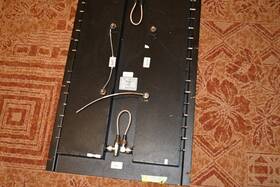
( Brand: Dbspectra ), ( Manufacturer Part Number: DB3826-WP ), ( Type: Antenna ), ( Band: Uhf )
Review DBSPECTRA Uhf Window Filter 456-470mhz 3.5mhz Bandwidth Rare 517a
The **DBSpectra DB3826-WP UHF Window Filter (456 470 MHz, 3.5 MHz Bandwidth, 517A)** is a high-performance, precision-engineered RF filter designed specifically for demanding applications in satellite communications, broadcast reception, and professional audio/video systems. This compact yet robust window filter operates within the UHF band, offering exceptional selectivity and signal integrity to isolate the desired frequency range while effectively attenuating out-of-band interference. With a narrow bandwidth of just **3.5 MHz**, the DB3826-WP ensures minimal signal distortion and optimal clarity, making it ideal for applications where clean, interference-free transmission is critical. Constructed with high-quality materials and advanced manufacturing techniques, this filter delivers superior performance with low insertion loss and high rejection rates, ensuring reliable operation in both indoor and outdoor environments. Its **517A** model variant is particularly well-suited for satellite broadcasting and digital television reception, where precise frequency isolation is essential for maintaining signal quality. The filter s robust construction and wide operating temperature range further enhance its reliability in diverse conditions, making it a trusted choice for professionals in the broadcasting and telecommunications industries. Whether integrated into a satellite receiver, broadcast studio, or professional audio system, the DB3826-WP ensures seamless signal processing with unmatched precision and durability.
**Pros and Cons of buying a DBSpectra DB3826-WP UHF Window Filter (456 470 MHz, 3.5 MHz Bandwidth, 517A)**
### **Pros**
1. **Selective Signal Reception** The filter is designed to pass a narrow bandwidth (3.5 MHz) centered at 463 MHz, which is ideal for isolating specific UHF signals (e.g., aviation, land mobile, or digital audio broadcasting) while rejecting adjacent interference. This is particularly useful in environments with dense RF activity, such as airports, emergency services, or urban areas with overlapping channels.
2. **High Isolation for Adjacent Channels** The steep roll-off of a 3.5 MHz bandwidth filter helps minimize interference from signals outside the passband, improving signal clarity and reducing noise in sensitive applications like audio or data transmission.
3. **Durable Construction** The "WP" designation suggests a weatherproof or ruggedized design, making it suitable for outdoor or harsh environments where exposure to moisture, dust, or temperature fluctuations may occur. The 517A model likely includes a robust mounting bracket or enclosure for stability.
4. **Compatibility with UHF Systems** The 456 470 MHz range covers critical UHF bands used in aviation (e.g., Mode S transponders), land mobile radio, and some digital audio broadcasting (DAB) systems. This makes it a versatile choice for applications requiring precise frequency isolation in this spectrum.
5. **Low Insertion Loss** A well-designed filter like this should have minimal signal attenuation within the passband, ensuring that the received signal remains strong and clear after filtering.
6. **Potential for Cost-Effective Upgrades** If you already have a UHF receiver or antenna system, adding this filter can enhance performance without requiring a complete overhaul of your setup.
7. **Manufacturer Reputation** DBSpectra is a known brand in RF and satellite communications, suggesting reliability in terms of build quality and technical support, though always verify reviews or third-party feedback for specific models.
---
### **Cons**
1. **Narrow Bandwidth Limitations** A 3.5 MHz bandwidth is highly selective, which means it may not be suitable for applications requiring broader frequency ranges (e.g., wideband scanning or multi-channel reception). If your use case involves monitoring multiple non-overlapping channels simultaneously, this filter may not be practical.
2. **Potential Signal Loss for Weak Sources** While the filter reduces interference, it may also attenuate weak signals that fall outside the optimal passband. If your target signal is near the edges of the 3.5 MHz window, performance could degrade.
3. **Cost Relative to Alternatives** High-quality RF filters, especially those with narrow bandwidths and weatherproofing, can be expensive. If your application doesn t require such precision, a broader-band filter or a software-defined radio (SDR) with digital filtering might be a more cost-effective solution.
4. **Installation Complexity** Weatherproof filters often require careful installation to ensure proper sealing against moisture or electromagnetic interference. Improper mounting could lead to performance issues or failure over time.
5. **Limited Flexibility** Unlike software-defined filters (e.g., in SDRs), this is a hardware filter with a fixed passband. If your frequency requirements change, you may need to replace the filter entirely.
6. **Potential for Overkill** If your current setup already has adequate interference rejection (e.g., through software tuning or other hardware), adding this filter may not provide meaningful improvements and could introduce unnecessary complexity.
7. **Availability and Lead Times** Specialized RF components, particularly those with narrow bandwidths, may have limited stock or longer lead times from distributors. Always check inventory before purchasing.
---
### **Recommendation**
The **DBSpectra DB3826-WP UHF Window Filter (456 470 MHz, 3.5 MHz bandwidth)** is a specialized tool best suited for applications requiring **highly selective signal isolation in a narrow UHF band**, such as:
- Aviation monitoring (e.g., Mode S transponders).
- Emergency services or land mobile radio systems with dense channel usage.
- Outdoor or industrial environments where interference suppression is critical.
- Digital audio broadcasting (DAB) or other narrowband digital transmissions.
**It is not ideal for:**- Broadband scanning or multi-channel reception.
- Applications where weak or edge-of-band signals are a priority.
- Budget-conscious setups where software-defined filtering (e.g., SDRs like RTL-SDR or HackRF) could achieve similar results at lower cost.
#### **Recommendation:**- **Buy if:** You have a specific need for precise 3.5 MHz UHF filtering in a challenging RF environment, and your current setup lacks adequate interference rejection. The weatherproof design also makes it a strong choice for outdoor or rugged applications.
- **Avoid if:** You require flexibility (e.g., tunable bandwidth), monitor a wide range of frequencies, or are working with weak signals near the filter s edges. In such cases, consider an SDR with digital filtering or a broader-band hardware filter.
- **Alternative Considerations:**- For **broadband applications**, a **low-pass or band-pass filter with a wider bandwidth** (e.g., 10 20 MHz) may suffice.
- For **digital filtering**, an **SDR (e.g., RTL-SDR, SDRplay, or HackRF)** paired with software like SDR#, GQRX, or GNU Radio can achieve similar selectivity without hardware limitations.
- If cost is a concern, evaluate **aftermarket or generic filters** from reputable RF distributors (e.g., Mini-Circuits, QST Electronics) that may offer comparable performance at a lower price.
**Final Verdict:** This filter is a **high-performance, niche solution** for users with demanding UHF filtering needs. Weigh its pros and cons against your specific requirements before purchasing, and consider alternatives if flexibility or cost is a priority.
Details:
Again, be sure this is the right item for you, check, then once certain, check again. For Security, I will send a confirmation message that must be replied to before ship.
specifications radiparaccessori:
- brand: Dbspectra
- mpn: Db3826-wp
- type: Antenna
- band: Uhf
returns radiparaccessori:
- policy: Returns Accepted
- time: 14 Days
- paid by: Buyer
- method: Money back
general radiparaccessori:
- condition: Used
- Radio Communication > Parts Accessories > Other Radio Communication Accs
offer radiparaccessori:
- options: Ship-to-home
- sold: 0
- availability: In Stock
- quantity: 1
- started: March 26, 2026
payments radiparaccessori:
- wallet: Google-pay
- other
- credit card: Diners-club
seller radiparaccessori:
- # reviews: 25953
- rating: 100.0%
- city: Fort Lauderdale, Florida
shipping radiparaccessori:
- service: UPS Ground
- cost: $0.00
- class: Standard
- carrier: UPS
- transit: 5-11 Days
- type: Fixed